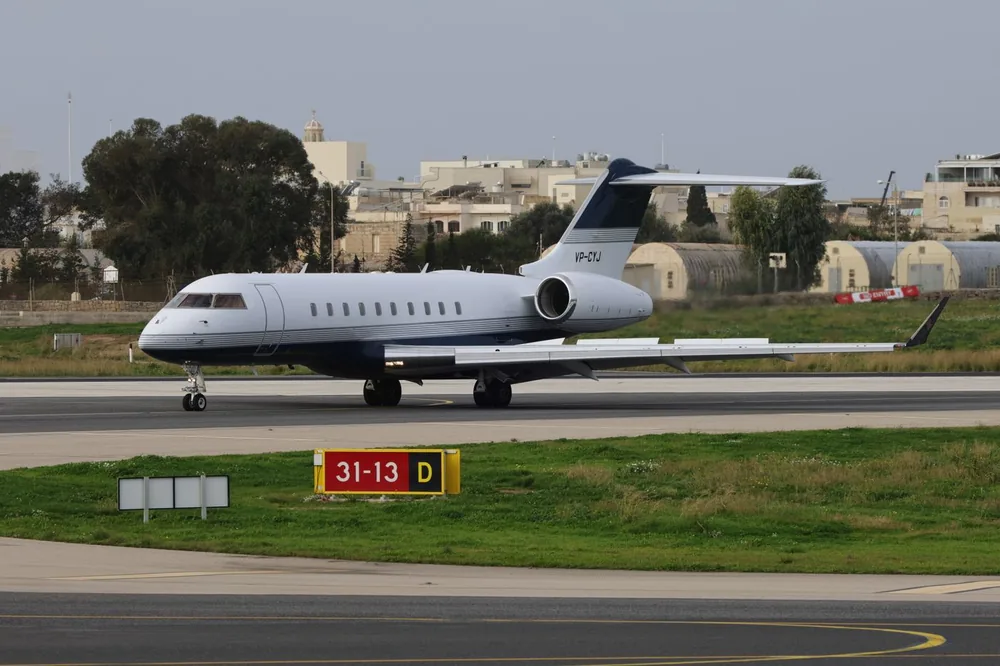
Super-Midsize Jet Charter: Coast-to-Coast Range & Bahamas Payload.
A super-midsize inquiry often begins with a longer journey and a wish to arrive feeling less interrupted. Put that wish into practical terms: whether a nonstop flight is important, how people want to sit, what they need to carry and what they will do aboard. Those priorities are more useful than choosing the largest brochure number.
Midsize and super-midsize jets: typically ~$6,500–$9,500 per flight hour.
Reviewed October 2026. ALINARI-selected North American Part 135 planning bands, benchmarked against Paramount Business Jets Charter Cost Guide, Magellan Jets Charter Cost Structure, Clay Lacy Hourly Rate Factors. Published categories and rates vary; Magellan’s premium rates may exceed these bands, and Clay Lacy is historical cost-factor context. Base hourly planning bands exclude positioning legs, 7.5% U.S. Federal Excise Tax (FET) on taxable domestic flights, federal segment fees, FBO/handling charges and international fees. Billable minimums and other trip-specific expenses may also apply. Explore the Planning & Pricing Guide.
THE ONBOARD EXPERIENCE
Coast-to-coast reach and high-payload island missions.
Regional mission planning
Super-midsize planning requests can connect Teterboro (KTEB) or Aspen-Pitkin County (KASE) with Naples (KAPF), Miami-Opa Locka (KOPF) or Nassau (MYNN). Have the carrier assess payload, headwinds and airport conditions for the chosen aircraft before relying on a nonstop arrival or a same-day yacht connection.
Tell the provider if avoiding a fuel stop is an essential requirement or simply a preference. Ask it to describe the proposed routing and the loading assumptions behind that plan. If a stop might be necessary, consider its effect on timing and the onward journey before comparing prices. The provider’s operational assessment is more relevant to your trip than a published maximum range on its own.
Compare how the cabin will be used
Request the actual floor plan and identify the seats each person would use. Consider table access, face-to-face seating and whether someone needs a quieter part of the cabin. Ask about sleeping or reclining arrangements only if they matter to the journey, and get the particular configuration confirmed. A comfortable seating plan should reflect your group rather than filling every possible position.
Test the luggage and service brief
Provide a full baggage list, including bulky equipment, and ask which storage areas can be accessed during flight. If catering or connectivity matters, describe the requirement without assuming a universal service level. Ask what is available on the proposed aircraft, how it is charged and what limitations could affect it. Keep a practical alternative in mind for work that depends on an internet connection.
Protect the wider itinerary
For a flight-to-yacht journey, identify the planned arrival airport, the actual embarkation port and a transfer arrangement. Give the yacht’s boarding window rather than asking both providers to infer it. Discuss what should happen if arrival timing changes. The same approach applies to a return flight: a preferred connection is an important coordination task, not a guarantee that separate services can never be delayed.
MODEL-SPECIFIC REFERENCE POINTS
Range assumptions, fuel stops & operating minimums.
Published model references help you compare specifications. Your proposal will identify the actual aircraft or vessel and its configuration.
Cessna Citation Longitude — range benchmark
Manufacturer range
3,500 nm
Four passengers at Mach 0.80 with NBAA IFR reserves. This is a manufacturer benchmark, not a nonstop route commitment.
Flat-floor cabins, galley service & full-party luggage.
A range figure has a test context
Read the passengers, speed and reserve assumptions attached to a manufacturer’s figure. Do not present that number as the distance your party can always fly with its own baggage and preferred operating conditions.
A category upgrade is not every amenity
A particular internet service, galley arrangement, cabin finish or rest setup must belong to the aircraft in the proposal. Ask again if the offered aircraft changes, even within the same category.
CATEGORY QUESTIONS
Questions to confirm on a super-midsize charter.
How should I compare this with a midsize option?+
Use the same route, dates, party and baggage profile for both. Compare the specific cabin, stop plan and full price scope, then decide whether the differences solve a need you actually have.
What should the quote say about extras?+
Ask which requested services and applicable charges are included, estimated or separately payable. Confirm positioning, catering, ground transfers and change terms where relevant. The planning estimator can help frame questions, but only a specific provider proposal can establish the offered scope.